Friday, May 28, 2010

Why I do not (always) want reality

I solemnly swear the interview below did not happen.

The other day I was trying to explain to my wife my total fascination of Wodehouse literature, who must have been wondering if I spent more time reading Wodehouse books than reading her emails when we were just engaged bachelors (well, I swear I did not, so that is that :) - well, If I stack up 15 Wodehouse books on my bookshelf and have five more lined up on Amazon, I guess she had a right to know!!!
But the interesting story is that the explanation developed into an explanation of my love for fantasy and daydreams, of why some of us love Wodehouse and Anthony Hope just as much as Dostoevsky and Tolstoy. So I wrote that up as an interview rather than an essay.

Q: What do you mean by un-realistic or fantasy fiction? A: Let me make it clear that by fantasy, I mean any fiction that is not aimed at reflecting the reality of today's life. For example, Anthony Hope's Prisoner of Zenda tells a story which could not have happened for the last 150 years, even allowing for all the fictious makeovers. But I still love reading and re-reading that classic.

Q: What is it that makes you love fantasy? A: The fascination I have for Wodehouse stems from the greatest gift of mankind - imagination.


Q: But is this not just daydreaming? I thought daydreaming was a totally useless thing? A: Wodehouse was a first-rate daydreamer. His gift for obscuring the reality and bring to life a world far removed from our day-to-day chores, stressful activities etc is remarkable. With a Wodehouse book,
you won't need a
stress reliever, ever. So no, daydreaming is not at all useless - in fact, that is one of the most effective ways to keep yourself alive.

A scene from The Prisoner of Zenda

Q: But surely that type of literature is just 'time-pass', not a serious part of your lifelong obsession, is it?
A: You are quite wrong. That is one of the points I am trying to get across to you - good literature needs a good study of human character, but where and how the story is set has nothing to do with the quality of the story.

Q: So you are looking more at how deeply an author looks at human nature? A: Precisely.

Q: And obviously you think human nature does not change quickly if you think fantasies that are hundreds of years old are still relevant. A: When did human nature change?

Q: But don't you get bored of a life that is not real? How can you keep reading stories which don't even remotely describe your situation in life? A: Actually I can't. I keep shifting between two types of literature. But remember that man has a deep-set attraction towards all things he can't do by himself, but has heard of happen. This is why all of us love fairy tales and Arabian Nights.

Q:
Do you
imagine yourself to be a Knight rescuing a Princess? A: lol. I used to :)

Q: What about this thing where people think other people who read Harry Potter are not really grown-up literary fans? A: Let them think so - I challenge them to find out why they find it difficult to keep shifting - as long as a story is well-told, and engages your curiosity, of course you should read it. Only stories I can't stand are those which do not have something in it and/or badly narrated.

Q: What about people who write great stuff, but can't narrate well? I find some authors' using overly-complex style, and some others who just say things as they are. A: If you can't be a narrator, you can't be a great novelist/story teller. I love people who say things as they are, and make their story really beautiful. Unfortunately, some authors don't know how to do that, but phenomena they want to describe are best described as sequences of events. A story being the most natural sequence of events, these people become authors. I have very little respect for such authors' literary ability - though I respect their scholarship.
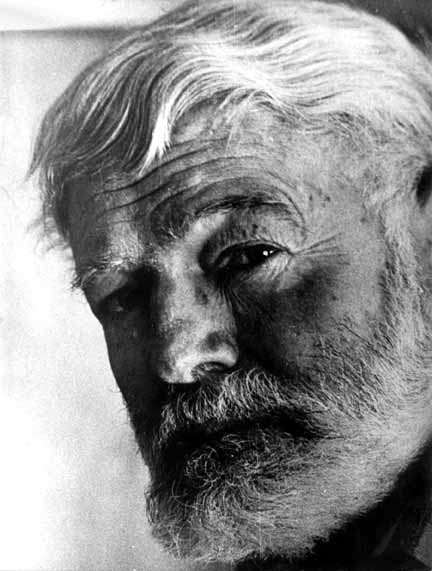
Ernest Hemingway, a great author who kept things simple

Q: But they are different from people like Tolstoy?
A: Yup. Tolstoy was one of the greatest narrators in history. Coming from the right author, realistic fiction is much more exciting than fantasy, and there are people who are really good at that stuff.

Q: For a hobbyist in literature, what type of literature do you think is more important as a part of his hobby? Realistic fiction or Fantasy?
A: I think both are equally important. A realistic fiction can only prove to be fascinating in a dreamworld, and a fiction is effective only with a background in reality. In other words, a man who does not know the real world can't enjoy fantasy, and a man who writes fantasy can't do so without knowing the real world.


Q: Do you really pick up a book after knowing if it is going to be useful to you? A: Lol. That would be ridiculous. I pick books largely on their reputation, and my taste. I believe every read of a good work is eventually satisfying.

Q: Reading something that is not going to help me in real life may be exciting, but isn't it a waste of my time if it can never come to my aid? A: Lol - if you have enjoyed the time, how can it be wasted time?

Q: Any advice? A: Nope. Go for a walk. Read a couple of good books. Call it a day.


Saturday, May 22, 2010

The Friendship Story

Quite a few years ago, one my friends, Shreesha Karantha, told me this (imaginative) story about two friends in the Indian epic, Mahabharata - Karna and Duryodhana. I thought it showed the depth of understanding and excellent harmony two people can achieve, so my humble attempt at translating it to English:

One day, at the height of his power, Duryodhana the king had gone out on some chores, and his wife was alone in the palace. Karna came to visit the king, but as he was a close family friend stopped for a chat with the queen. Soon they began to play the game of dice, and it soon developed into a very relaxed game which they continued to play on the Diwan. For the sake of betting, the Queen bet her pearl necklace and Karna bet his golden ring. Eventually Karna won the game. By this time the mood was very relaxed, and queen had no intention of parting with her necklace. So she refused to give it to Karna, and Karna playfully tried to grab the necklace, and the queen jumped from the bed. Karna's hand struck the necklace and broke the thread, causing the pearls to scatter everywhere.

At this precise moment Duryodhana entered, and for a single second surveyed the whole scene - His wife's pale face in complete shock, pieces of the game of dice strewn all over the place, Karna's hand near his wife's neck, pearls dancing all over the floor, and his wife trying to escape from Karna. He just said:

"Karna, shall I give you the pearls in a bunch or around the string of a new necklace"?

Monday, January 18, 2010

The Pickwick Papers

After a long break from literature, I returned to the good old classics - after a completely satisfying two weeks, I finished the Pickwick Papers - or, formally, The Posthumous Papers of the Pickwick Club, today. This being the first true English language blockbuster in printing history, he will be a rare reader who can discern that Dickens was 24 when he wrote the first of his masterpieces.

I remember trying to read this multiple times when I was very young - in my school days - but the work was too big for me back then. That remains true in some measure - This is not a work that has to be read letter by letter, but for most of its numerous pages makes you read it letter by letter.

An incident that occurred in India during the centenary celebrations of Dickens (around 1970) shows the immense popularity of this novel:

Sometime around 1970, marking the centenary of Dicken's death, a Dickens expert from UK visited many colleges in India, giving talks about the works of Dickens and their significance. When he asked about the most popular books by Dickens in these parts, response from the Botany Professor B.G.L. Swamy in the Presidency College of Madras (now Chennai) was this: (translated from Kannada, from his book 'Collegu Ranga') :
"There are many people who maintain a steady habit of reading English literature, both people who teach or study English everyday and make it part of their living, and those for whom English is just an optional pleasure. Many such people maintain their own personal libraries, according to their knowledge of English language. One work of Dickens that all such libraries have in common is the Pickwick Papers."

Wednesday, October 7, 2009

Galahad's Blandings


Finally, a Blandings castle novel which I loved just as much as my favorite Jeeves and Wooster novel. Till I read Galahad at Blandings, I had thought of Blandings as Wodehouse's secondary creation - quality comedy lacking the genius of usual Jeeves novels. But Galahad changed all that - Lord Emsworth is as absent minded and pig-minded as usual, Lady Hermione as bossy as other wodehouse aunts, but Galahad exceeds all expectations.

Galahad at Blandings has a very subtle rigor to it - a literary rigor which keeps the plot tightly in line, making none of the twists and turns distracting. The positive character of Galahad gives an extra pace to the novel - something that was missing in Blandings minus Galahad, like Leave it to Psmith. If you read between the lines, you will notice a subtle balance of characters - Wodehouse plots the story in a way where no character is used too much. Well, packed with the usual supply of lovers, tangles, pigs, menaces and of course, lots of love, this ranks right at the top of Wodehouse novels.

Overlook Press page for the book
Amazon Link

Monday, October 5, 2009

India After Gandhi

Well, Ramachandra Guha's India After Gandhi is not a literary masterpiece - nor does it talk about our culture. So what is a work on political history doing in this blog? To point out exactly that - lack of focus on things other than turmoils in post-independent India. The book discusses the struggles of India at great lengths, but does not seem to be interested in its triumphs just as much. Also, the book does not provide even a cursory look at the cultural changes in modern India.

The book is very readable, and does not get boring even for such a huge work - it is nearly 1000 pages long.

Saturday, September 26, 2009

Visiting the Frick Collection


Until today, my favorite museum in New York had been the Met - especially because it houses my favorite painting. But today a strong contender to the #1 museum spot came up - The Frick Collection.
Eventhough it is one of the more famous 'small museums', I had never bothered to read up about the Frick, so when I visited it today on a whim, the pleasure of seeing the rare collection was doubled by surprise. And oh my, the collection suits me so very much!!

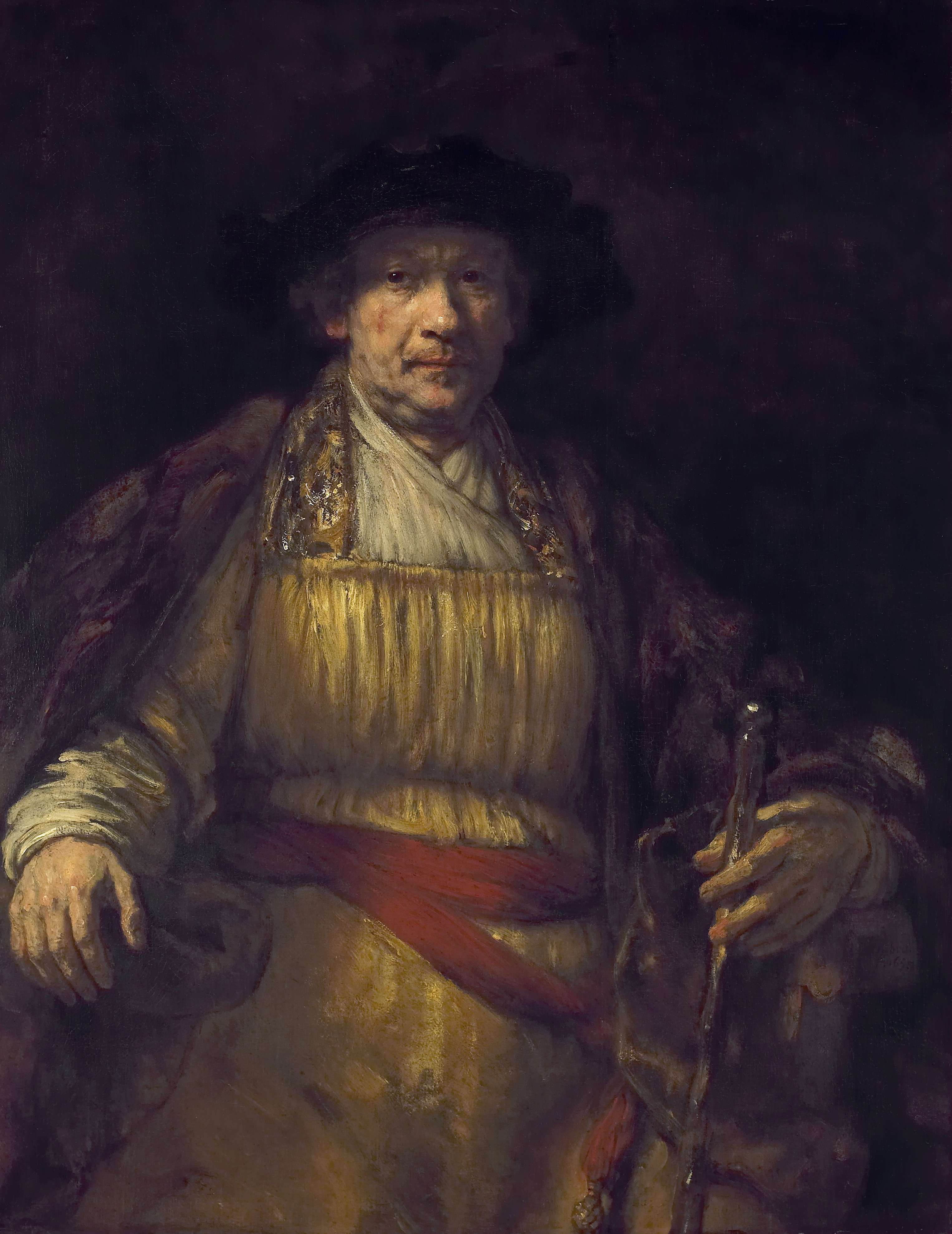
Housed in 18th-century styled palace of Mr. Frick, the collection of European paintings is absolutely astounding - if you get a chance, in addition to observing Rembrandt's self portrait from close up, go all the way back to the end (near the boucher room) and see the painting. It is a long way, but the effect of his golden dress and the face in shadows is worth the walk! Turner's waterfronts are as pleasing as ever, but Paulo Veronese touches your wisdom with The Choice Between Virtue and Vice and Wisdom and Strength. The house itself is as breathtaking as some of its paintings - the elegant drawing room nearly, not quite, as appealing as Rembrandt's The Polish Raider or Renoir's portrait of a young mother with her two children.

One of the special attraction to me were the books - the elegant display all along the walls in the reading room adds a special, rarely seen, effect to the display of other art work.
Also, almost none of the paintings are 'protected' behind ropes and enclosures - on the downside, though, you cannot take your kids if they are less than ten years old :(

Museum entrance is at 70th street, 5th Avenue. It is open 10 AM to 6 PM from Monday through Saturday, whereas on Sundays it operates from 11 AM to 5 PM

Tuesday, September 22, 2009

The Lost Symbol

Disappointing. Dan Brown's new novel was utterly frustrating. The storyline is dull, and writing lacks the rigor of 'Da Vinci Code'. Only thing I could remember after reading this was an old saying: "It is much harder to stay somewhere than to get there". Dan Brown has definitely not lived upto the high standards set by his previous novel - The Lost Symbol is more in the league of his earlier works, like Angels and Daemons, which were, in my opinion, mediocre at their best.

The identity of the antagonist was not well-hidden, and the plot is very predictable. One of the reasons Da Vinci Code was so exciting, at least for me, was that the whole mystery unfolded gradually, without explicitly forcing a treasure hunt on the readers. It started out as a genuine murder mystery - but Lost Symbol forgets all such pretense and jumps into a treasure hunt from page one, and the ideas he has used for the mystery lack the pull. And the science seems to be a bunch of words :(. Dan Brown's style of emphasis - using impressing statements in italics - works only if the content is powerful. Without that, his new novel is something like poor style without good content.