The other day I was trying to explain to my wife my total fascination of Wodehouse literature, who must have been wondering if I spent more time reading Wodehouse books than reading her emails when we were just engaged bachelors (well, I swear I did not, so that is that :) - well, If I stack up 15 Wodehouse books on my bookshelf and have five more lined up on Amazon, I guess she had a right to know!!! But the interesting story is that the explanation developed into an explanation of my love for fantasy and daydreams, of why some of us love Wodehouse and Anthony Hope just as much as Dostoevsky and Tolstoy. So I wrote that up as an interview rather than an essay.
Q: What do you mean by un-realistic or fantasy fiction? A: Let me make it clear that by fantasy, I mean any fiction that is not aimed at reflecting the reality of today's life. For example, Anthony Hope's Prisoner of Zenda tells a story which could not have happened for the last 150 years, even allowing for all the fictious makeovers. But I still love reading and re-reading that classic.
Q: What is it that makes you love fantasy? A: The fascination I have for Wodehouse stems from the greatest gift of mankind - imagination.
Q: But is this not just daydreaming? I thought daydreaming was a totally useless thing? A: Wodehouse was a first-rate daydreamer. His gift for obscuring the reality and bring to life a world far removed from our day-to-day chores, stressful activities etc is remarkable. With a Wodehouse book,
you won't need a stress reliever, ever. So no, daydreaming is not at all useless - in fact, that is one of the most effective ways to keep yourself alive.
 A scene from The Prisoner of Zenda
 Q: But surely that type of literature is just 'time-pass', not a serious part of your lifelong obsession, is it? A: You are quite wrong. That is one of the points I am trying to get across to you - good literature needs a good study of human character, but where and how the story is set has nothing to do with the quality of the story.
Q: So you are looking more at how deeply an author looks at human nature? A: Precisely.
Q: And obviously you think human nature does not change quickly if you think fantasies that are hundreds of years old are still relevant. A: When did human nature change?
Q: But don't you get bored of a life that is not real? How can you keep reading stories which don't even remotely describe your situation in life? A: Actually I can't. I keep shifting between two types of literature. But remember that man has a deep-set attraction towards all things he can't do by himself, but has heard of happen. This is why all of us love fairy tales and Arabian Nights.
Q: Do you imagine yourself to be a Knight rescuing a Princess? A: lol. I used to :)
Q: What about this thing where people think other people who read Harry Potter are not really grown-up literary fans? A: Let them think so - I challenge them to find out why they find it difficult to keep shifting - as long as a story is well-told, and engages your curiosity, of course you should read it. Only stories I can't stand are those which do not have something in it and/or badly narrated.
Q: What about people who write great stuff, but can't narrate well? I find some authors' using overly-complex style, and some others who just say things as they are. A: If you can't be a narrator, you can't be a great novelist/story teller. I love people who say things as they are, and make their story really beautiful. Unfortunately, some authors don't know how to do that, but phenomena they want to describe are best described as sequences of events. A story being the most natural sequence of events, these people become authors. I have very little respect for such authors' literary ability - though I respect their scholarship.
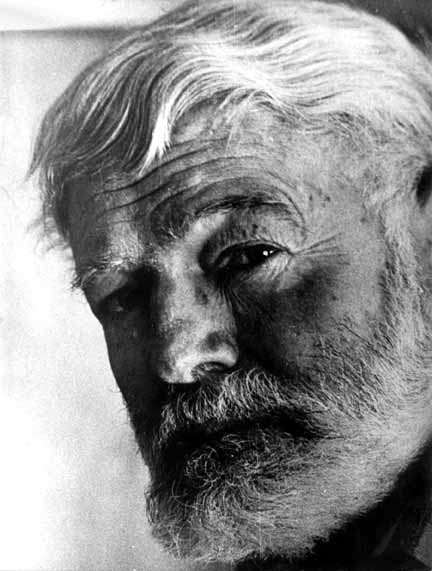 Ernest Hemingway, a great author who kept things simple
Q: But they are different from people like Tolstoy? A: Yup. Tolstoy was one of the greatest narrators in history. Coming from the right author, realistic fiction is much more exciting than fantasy, and there are people who are really good at that stuff.
Q: For a hobbyist in literature, what type of literature do you think is more important as a part of his hobby? Realistic fiction or Fantasy?
A: I think both are equally important. A realistic fiction can only prove to be fascinating in a dreamworld, and a fiction is effective only with a background in reality. In other words, a man who does not know the real world can't enjoy fantasy, and a man who writes fantasy can't do so without knowing the real world.
Q: Do you really pick up a book after knowing if it is going to be useful to you? A: Lol. That would be ridiculous. I pick books largely on their reputation, and my taste. I believe every read of a good work is eventually satisfying.
Q: Reading something that is not going to help me in real life may be exciting, but isn't it a waste of my time if it can never come to my aid? A: Lol - if you have enjoyed the time, how can it be wasted time?
Q: Any advice? A: Nope. Go for a walk. Read a couple of good books. Call it a day.

